

Global K-Pop Event Market Set to Reach USD 17.44 Billion by 2035 Amid Rising Fan Engagement and Hybrid Event Growth
K-Pop Event Market
New research highlights strong demand for concerts, fan meetings, music festivals, and hybrid K-pop experiences as global audiences continue to expand.
Growing international fan communities and increased brand investment are expected to drive sustained expansion across the global K-Pop event market.”
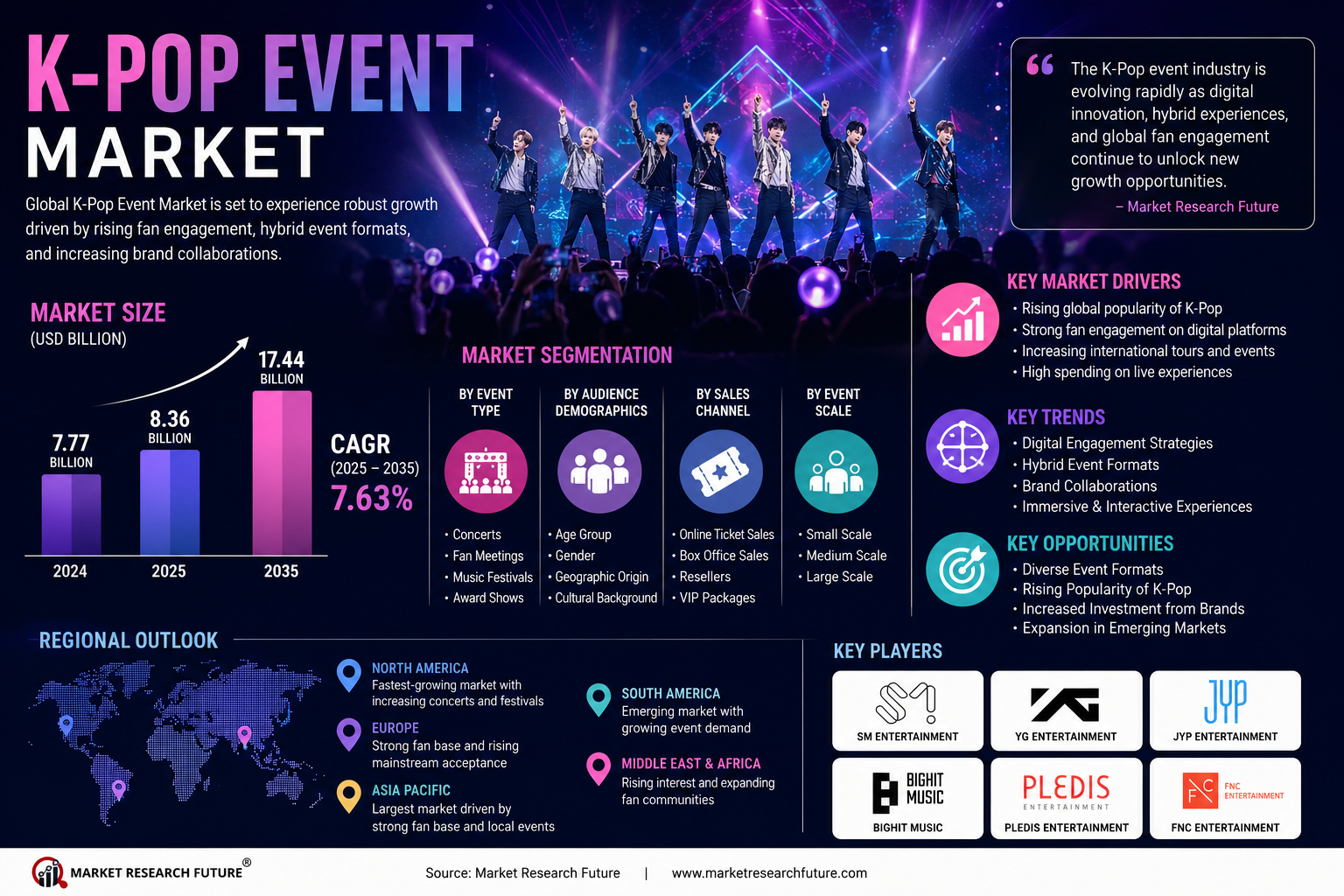
NEW YORK, NY, UNITED STATES, June 25, 2026 /EINPresswire.com/ -- The global K-Pop Event Market is experiencing remarkable momentum as the international popularity of Korean pop culture continues to attract millions of fans worldwide. According to a recent study published by Market Research Future, the market is expected to grow from USD 8.36 billion in 2025 to USD 17.44 billion by 2035, registering a compound annual growth rate (CAGR) of 7.63% during the forecast period.— Market Research Future (MRFR)
The rapid evolution of the K-pop industry has transformed live entertainment into a global phenomenon. Once concentrated primarily in South Korea and neighboring Asian countries, K-pop events now draw significant attendance across North America, Europe, South America, the Middle East, and Africa. International fan communities continue to grow through digital platforms, social media engagement, streaming services, and global artist promotions.
The K-pop event ecosystem encompasses concerts, fan meetings, music festivals, award ceremonies, exclusive fan experiences, and hybrid virtual events. Event organizers are increasingly adopting innovative technologies and engagement strategies to create immersive experiences for fans while expanding revenue opportunities.
Growing Global Popularity Fuels Market Expansion
One of the primary drivers supporting market growth is the increasing global popularity of K-pop artists and entertainment brands. Major entertainment companies have successfully established international fan bases through strategic marketing, global tours, social media engagement, and content distribution. According to the report, the global K-pop event market is valued at USD 8.36 billion in 2025 and is projected to reach USD 17.44 billion by 2035, reflecting a CAGR of 7.63% during the forecast period. This steady expansion highlights the strong commercial potential of live K-pop experiences across both mature and emerging markets.
The expansion of K-pop beyond traditional geographic boundaries has enabled event organizers to host large-scale performances in major international cities. Fans are increasingly willing to travel long distances and invest in premium event experiences, contributing significantly to ticket sales and merchandise revenues. In many cases, concerts and fan events now sell out within minutes, demonstrating the intensity of demand and the willingness of audiences to pay for exclusive access, limited-edition merchandise, and VIP packages.
The global reach of K-pop has also encouraged governments, tourism boards, and local event promoters to support large-scale events that generate economic activity through tourism, hospitality, transportation, and retail spending. As international fan communities continue to grow, K-pop events are becoming important cultural and economic drivers in cities that host major tours, festivals, and award shows. This broader ecosystem is helping the market move beyond entertainment alone and into a wider commercial and tourism-oriented growth cycle.
Get Full PDF Sample Copy of Report: (Including Full TOC, List of Tables & Figures, Chart) @ https://www.marketresearchfuture.com/sample_request/33681
Digital Engagement Redefining Fan Experiences
Digital engagement strategies continue to reshape how artists interact with audiences. Social media platforms, livestreaming technologies, mobile applications, fan communities, and digital content ecosystems have created continuous engagement opportunities between performers and fans. These channels allow entertainment companies to maintain year-round visibility, build anticipation for events, and strengthen fan loyalty before, during, and after live performances.
Event organizers are leveraging advanced digital tools to promote events, sell tickets, manage fan interactions, and enhance audience participation. Interactive features such as live chats, digital fan signings, augmented reality experiences, and virtual meet-and-greets are becoming increasingly common. These tools not only improve the fan experience but also help organizers collect valuable audience data that can be used to refine marketing strategies, personalize promotions, and improve future event planning.
The rise of digital-first fan behavior has also expanded the market’s reach across age groups and geographic regions. Younger audiences, in particular, are highly responsive to mobile-based ticketing, social media campaigns, and real-time content updates. At the same time, older and international fans are increasingly engaging through online communities and streaming platforms, making digital engagement a critical component of market expansion. These digital innovations allow event companies to reach broader audiences while creating additional monetization opportunities beyond traditional ticket sales. The integration of technology into event experiences has become a critical competitive differentiator within the market.
Hybrid Event Formats Gain Significant Traction
The growing adoption of hybrid event formats represents one of the most influential trends shaping the future of the K-pop event industry. Hybrid events combine in-person attendance with virtual participation, enabling organizers to engage global audiences regardless of geographical limitations. This model has become especially valuable in a market where fan communities are widely dispersed across continents and where demand often exceeds venue capacity.
Virtual ticketing models have opened new revenue streams by allowing fans who cannot attend physical events to participate remotely. High-definition streaming, exclusive online content, multi-camera viewing options, and interactive fan features enhance the overall experience. In many cases, virtual access packages are priced at different tiers, allowing organizers to capture revenue from a wider range of consumers while offering flexible participation options.
Hybrid formats also provide organizers with greater operational flexibility while reducing dependence on venue capacity limitations. They can support simultaneous engagement across multiple time zones and help artists maintain global visibility even when touring schedules are limited. As technology infrastructure continues to improve, hybrid events are expected to remain an important component of future K-pop event strategies. Their ability to combine scale, accessibility, and monetization makes them especially attractive in a market that is increasingly shaped by digital consumption habits and international fan demand.
Brand Collaborations Creating New Revenue Opportunities
Strategic partnerships between entertainment agencies and global brands are generating substantial growth opportunities within the market. Companies across industries including fashion, cosmetics, technology, food and beverage, and consumer goods increasingly view K-pop events as valuable marketing platforms. These collaborations are particularly effective because K-pop audiences are highly engaged, trend-sensitive, and responsive to branded experiences that align with artist identity and fan culture.
Brand collaborations often involve event sponsorships, exclusive merchandise launches, experiential marketing activations, and influencer-driven campaigns. These partnerships help organizations expand visibility while creating unique experiences for fans. In addition to direct sponsorship revenue, brands benefit from social media exposure, product placement, and association with globally recognized artists and entertainment franchises.
The strong emotional connection between K-pop artists and their audiences makes event-based marketing particularly effective. As a result, brands are expected to increase investment in K-pop-related initiatives throughout the forecast period. This trend is likely to support the growth of premium event formats, limited-edition collaborations, and cross-promotional campaigns that combine entertainment, retail, and digital engagement. With rising competition among brands for consumer attention, K-pop events are emerging as a powerful channel for reaching young, international, and highly active fan communities.
Detailed Market Segmentation Analysis
Based on event type, the market is segmented into concerts, fan meetings, music festivals, and award shows. Concerts continue to represent the largest revenue-generating segment due to strong attendance rates, premium ticket pricing, and merchandise sales. Concerts remain the core attraction of the K-pop event market because they offer large-scale production value, live performances, synchronized choreography, and direct artist-fan interaction that drive high consumer demand.
Fan meetings are also experiencing substantial growth as audiences seek more personalized interactions with artists. These events often provide exclusive access, photo opportunities, autograph sessions, and interactive experiences that strengthen fan loyalty. Fan meetings are especially popular among dedicated fan communities that value intimate engagement and limited-capacity experiences.
Music festivals featuring multiple artists have gained popularity among younger audiences seeking diverse entertainment experiences. These events often combine live performances, cultural showcases, food experiences, and branded activations, making them attractive to both domestic and international attendees. Meanwhile, award shows continue to attract significant viewership and sponsorship investment due to their prestige, media exposure, and ability to bring together top artists, industry leaders, and global audiences.
Based on audience demographics, the market is segmented into age group, gender, geographic origin, and cultural background. Younger consumers, particularly teenagers and young adults, remain the primary audience segment due to their strong digital engagement and active participation in fan communities. However, participation among older demographics has steadily increased as K-pop continues to gain mainstream acceptance across global markets.
In terms of gender, the audience base is highly diverse, with strong participation from both female and male fans, as well as growing engagement from non-binary and inclusive fan communities. This broad demographic appeal supports wider market penetration and encourages event organizers to design inclusive experiences that resonate with varied audience preferences.
Geographic origin is another important segmentation factor, as fans now come from a wide range of regions including Asia-Pacific, North America, Europe, South America, the Middle East, and Africa. The industry's ability to attract multicultural audiences has contributed significantly to international expansion. Fans from different regions actively participate in both online and offline communities, creating strong demand for localized events and global touring schedules.
Cultural background also plays a key role in shaping event demand. K-pop has successfully crossed cultural boundaries, appealing to audiences with diverse language preferences, entertainment habits, and lifestyle interests. Event organizers are increasingly tailoring content, communication strategies, and fan experiences to reflect this diversity and maximize engagement.
Based on sales channel, the market is segmented into online ticket sales, box office sales, resellers, and VIP packages. Online ticket sales remain the dominant distribution channel due to convenience, accessibility, and digital integration. Mobile ticketing platforms, official event websites, and specialized entertainment applications have simplified the purchasing process for consumers and improved transaction efficiency.
Box office sales continue to serve audiences who prefer direct purchase options or last-minute ticket availability. Resellers also play a role in the market, particularly for high-demand events where tickets sell out quickly. However, organizers are increasingly focusing on authorized and secure sales channels to reduce fraud and improve customer trust.
VIP packages represent a high-value segment within the market, offering premium benefits such as priority seating, exclusive merchandise, backstage access, soundcheck passes, and artist interactions. These packages are especially attractive to highly engaged fans willing to pay more for enhanced experiences. The growing adoption of data analytics and customer relationship management systems is helping organizers optimize sales performance and improve fan experiences throughout the purchasing journey.
Based on event scale, the market is segmented into small scale, medium scale, and large scale events. Small-scale events typically include intimate fan meetings, promotional showcases, and localized performances that cater to niche audiences. These events are often used to build artist visibility, strengthen fan loyalty, and test new markets.
Medium-scale events include regional concerts, multi-artist showcases, and mid-sized festivals that balance accessibility with strong revenue potential. These events are increasingly popular in emerging markets where demand for K-pop is rising but venue capacity remains moderate.
Large-scale events represent the most visible and revenue-intensive segment, including stadium concerts, international tours, major festivals, and award ceremonies. Large-scale events generate substantial income through ticket sales, sponsorships, merchandise, and media rights. They also contribute significantly to tourism and local economic activity, making them a key growth driver for the industry.
Regional Outlook
Asia-Pacific continues to dominate the global K-pop event market due to the industry's origins and established fan base. South Korea remains a major hub for event production, artist management, and entertainment innovation. Japan, China, Thailand, Indonesia, and other regional markets also contribute significantly to event attendance and revenue generation.
North America represents one of the fastest-growing regional markets, supported by increasing mainstream acceptance of K-pop and rising attendance at concerts and festivals. Major cities across the United States and Canada regularly host sold-out performances by leading artists, while fan communities continue to expand through digital platforms and live events.
Europe is also witnessing strong growth as fan communities expand across multiple countries. Cities in the United Kingdom, France, Germany, Spain, and other European markets are seeing increased demand for K-pop concerts, fan meetings, and festivals. Similarly, South America, the Middle East, and Africa are emerging as promising markets with increasing demand for live K-pop experiences and international artist tours.
Competitive Landscape
The market features strong participation from leading entertainment companies including SM Entertainment, YG Entertainment, JYP Entertainment, Big Hit Music, Pledis Entertainment, and FNC Entertainment.
These organizations continue to invest in artist development, international expansion, event innovation, digital engagement platforms, and strategic partnerships. Their ability to cultivate loyal fan communities and deliver premium entertainment experiences remains a key competitive advantage.
Future Outlook
The future of the K-pop event market appears highly promising as global fan engagement continues to strengthen. Increasing investment from brands, advances in event technology, expansion into emerging markets, and the development of diverse event formats are expected to support sustained growth over the coming decade.
As the industry evolves, organizations that successfully combine immersive live experiences with digital engagement capabilities will be well-positioned to capitalize on growing consumer demand. The continued globalization of Korean entertainment culture is expected to create substantial opportunities for event organizers, artists, sponsors, and technology providers alike.
Discover Related Research Reports By Market Research Future:
Events Industry Market
https://www.marketresearchfuture.com/reports/events-industry-market-12035
Anti Pollution Skin Care Market
https://www.marketresearchfuture.com/reports/anti-pollution-skin-care-market-26324
Casino Hotel Market
https://www.marketresearchfuture.com/reports/casino-hotel-market-24538
Sagar Kadam
Market Research Future
+ +1 628-258-0071
email us here
Visit us on social media:
LinkedIn
Facebook
YouTube
X
Legal Disclaimer:
EIN Presswire provides this news content "as is" without warranty of any kind. We do not accept any responsibility or liability for the accuracy, content, images, videos, licenses, completeness, legality, or reliability of the information contained in this article. If you have any complaints or copyright issues related to this article, kindly contact the author above.
